
www.automation-mag.com
20
'26
Written on Modified on
Autonomous Manufacturing Using Industrial AI and Digital Twins
Siemens and NVIDIA deploy NVIDIA Omniverse and NVIDIA Cosmos to automate PCB quality inspection and production planning in electronics manufacturing.
www.siemens.com
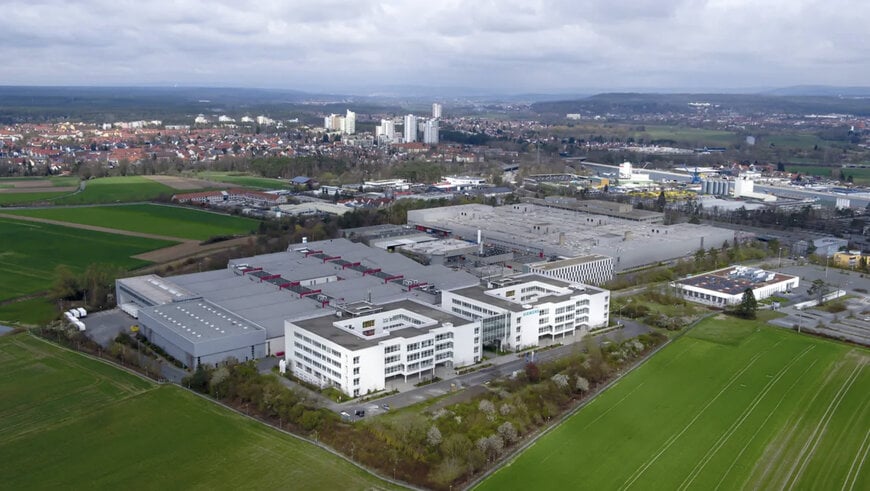
Siemens AG and NVIDIA are collaborating to implement industrial AI and digital twin systems for autonomous manufacturing at the Siemens Electronics Factory in Erlangen, Germany. These software architectures optimize production ramp-up and dynamic scheduling for power electronics, drives, and frequency converters used in machine tools, battery production, and discrete and process manufacturing.
Industrial Challenge and Partner Roles
Electronics manufacturing requires rapid adaptation to fluctuating order volumes, material shortages, and design iterations while maintaining high throughput. Traditional production preparation and scheduling rely heavily on physical prototypes and manual calculations by human planners, creating bottlenecks during product introductions and schedule adjustments. Overcoming these limitations at an industrial scale required combining domain-specific automation architecture with high-performance computing. Within this cooperation, Siemens provides industrial software, automation hardware, and manufacturing domain expertise, while NVIDIA supplies accelerated computing infrastructure, physical AI simulation frameworks, and generative world models.
Technical Architecture for Inspection and Planning
The technical implementation addresses two core operational functions: automated optical inspection for printed circuit board (PCB) assemblies and agent-based production scheduling. Previously, configuring vision inspection equipment required waiting several weeks for physical PCB prototypes to train machine vision algorithms. In the joint system, NVIDIA Cosmos world models generate photorealistic synthetic data directly from the digital twin of the PCB assembly. Engineers use these synthetic representations to train and configure automated optical inspection systems before physical prototypes are manufactured.
For factory scheduling, the system replaces manual trade-off evaluations across capacity, material availability, delivery dates, and line allocation with an automated workflow supported by the NVIDIA Factory Operations Blueprint. When new manufacturing orders enter the system, an AI agent generates multiple production scenarios and evaluates their impact against defined key performance indicators (KPIs). Before execution on the shop floor, each proposed schedule is validated against real factory operational data using a facility-wide digital twin built with NVIDIA Omniverse libraries.
Deployment and Live Production Testing
Following an initial partnership announcement at CES in Las Vegas in January 2026, joint engineering teams developed and integrated the first operational software modules in less than ten months. The systems were deployed and validated directly within live operations at the Erlangen facility. Established in 1971 with approximately 1,000 employees, the plant already runs more than 100 AI algorithms across logistics, quality control, and maintenance, and is undergoing a 500 million euro expansion scheduled through 2030.
“Factories need to handle change as well as they handle repetition. AI and simulation make that possible,” said Rev Lebaredian, Vice President, Physical AI Simulation at NVIDIA. “At Erlangen, Siemens and NVIDIA are putting years of collaboration to work on the factory floor – training inspection systems before physical prototypes exist, designing and testing production plans in simulation before changing the real world.”
Quantifiable Operational Impact
Decoupling machine vision training from physical hardware availability through synthetic data generation reduces engineering effort during virtual production preparation for PCB assemblies by up to 85 percent and shortens time-to-market by up to 40 percent. Simultaneously, validating agent-generated schedules within a facility digital twin reduces production planning costs by up to 20 percent and increases operational adaptability during supply chain disruptions. These implementations contribute to an annual productivity increase of seven percent at the Erlangen facility.
Edited by Sucithra Mani, Induportals editor – adapted by AI.
www.siemens.com
